Before the formation of our universe, the reality filled with infinite energy, was devoid of matter, it was opaque and it existed forever! At some point in time, the energy started to exert a force upon itself and started to get compressed. Contradicting our popular notion that gravity came after mass, the gravitation force is said to be the reason for such sudden compression of energy upon itself. However contradicting this perspective may be, we’ll go by the theory as such.
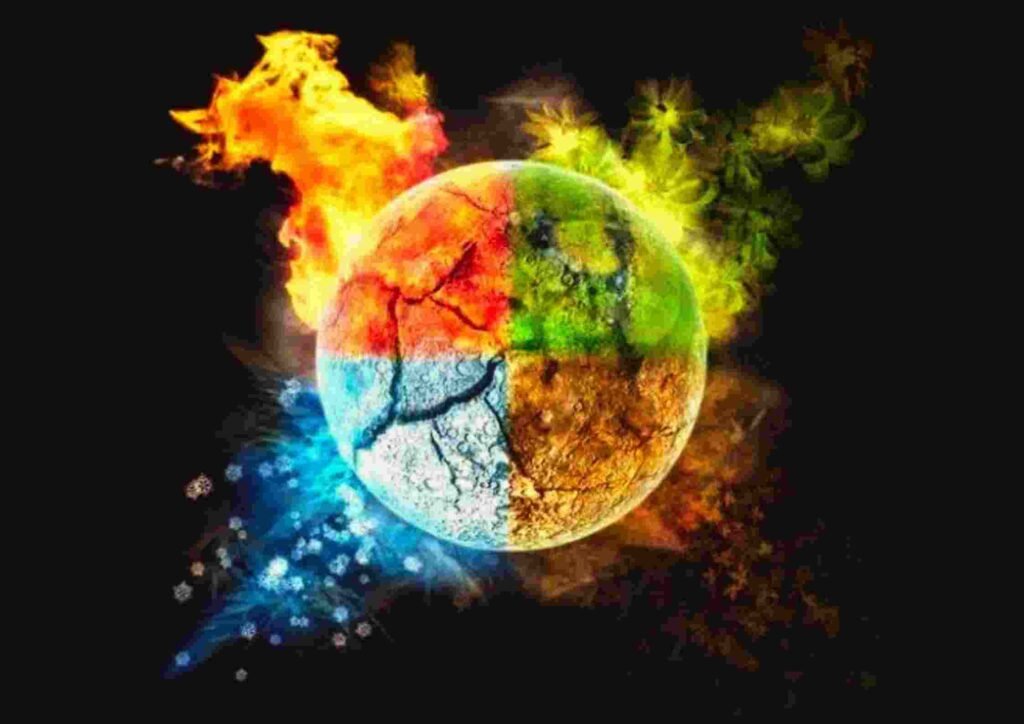
The self-compression of a relatively finite amount of energy resulted in the formation of microscopically small particles of matter called atoms. Here, atoms and not the subatomic particles are known to be the smallest units of matter, because it is said there must be a definite state of matter below which only energy could exist. Once enough atoms were formed in reality, they started reacting with each other and formed the 5 basic elements of cosmic creation – earth, fire, air, water and space.
The compaction of atoms by reacting with each another created air, the lightest element in the universe. Air was the first formed element in reality. The ‘air’ element could mean the first formed gases of hydrogen and helium found across the universe. Air, further compacted to form water, a little less viscous element than air, and by water, we mean the liquids. Next came earth, that is, the sand and rocks, upon further compaction of the ‘water’ element.
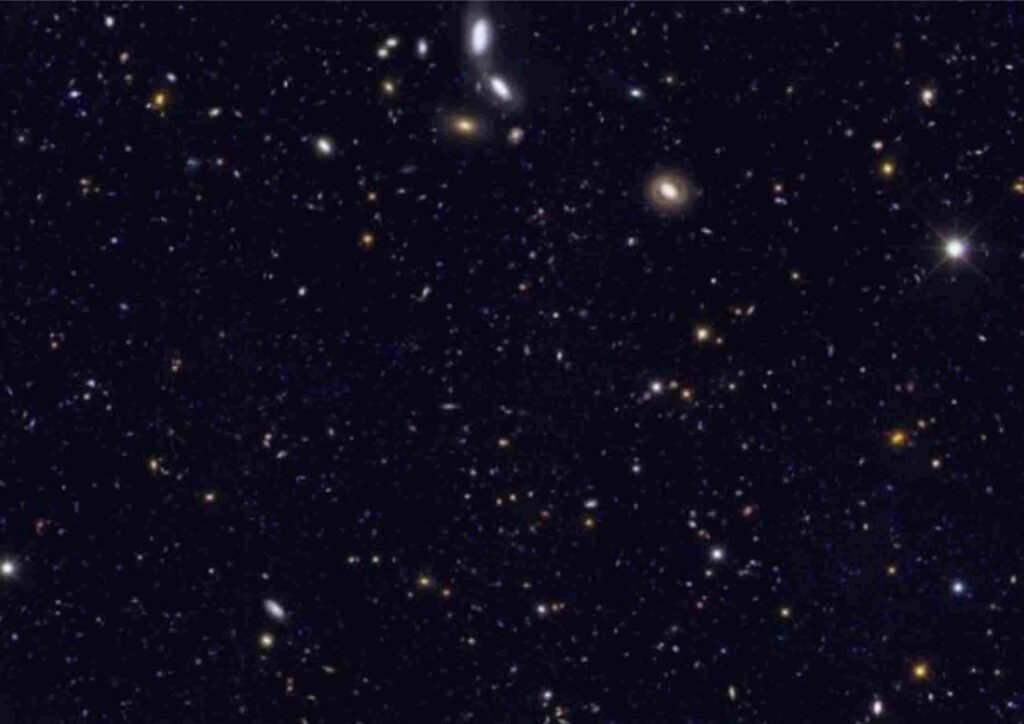
The ‘earth’ element resulted from increasing resistance (due to compaction) to the flow of atoms in the liquid medium. The element of ‘space’ came about after increased conversion of energy into air, water, earth and the increasing emptiness in the energy medium. The element formation was of course aided by gravity acting upon the individual atoms (gravity being an inherent property of energy).
In the first element, ‘air,’ gravity acted within the molecules, compressed the atoms and decreased their flow, producing water. Elements heavier than hydrogen and helium, but lighter than iron, whose mass lie in between could’ve been referred as liquids. The increasing gravity in water further decreased its flow and finally stopped water from flowing and formed the solid earth. The earth element may refer to the elements heavier than iron, the ones we see in the periodic table today.
These atoms had much higher mass than that of air and water. Formation of fire holds a special place in the evolution of the elements. Fire, it is said, was the result of friction between the atoms of Earth. In the compacted Earth, where gravity constantly crushed the atoms together, the inner pressure grew and increased the temperature of the medium producing heat. When the temperature of Earth got high enough, the element of ‘fire’ was born, accompanied by light. And so, it is said that light and heat energy are the by-products of the element of ‘fire’. These 5 basic elements of creation aided in the evolution of the universe and life in the long run.

This way, the smallest units of matter, atoms, are formed from the primordial energy through a process of self-compression and, this process is ever happening! Once matter (as the 5 elements) was formed, the atoms began interacting with each other in an order. The sequence of interactions, it is said, was due to the primordial energy’s causative property.
A large number of atoms were formed during the childhood of our universe; their interaction formed the celestial bodies we see in the sky now – the stars, the galaxies, and the planets – and finally life on our planet Earth. It’s unclear how long the energy stayed put before transforming into matter, but the result of the transformation process was that a chain reaction had begun with the result being us, asking the question, “What’s this all about?”
So apparently, the universe is considered to be a body (and most certainly a sphere!) with matter inside it, in the form of the 5 elements and the spherical body is surrounded by energy in all directions.
Science and Siddhas agree up to the point of matter creation, to certain degrees, i.e., the formation of matter from energy. But, about the origin and evolution of life, Siddha philosophy (spirituality) propounds a curious theory, and it doesn’t challenge the scientific theories but supplements them!