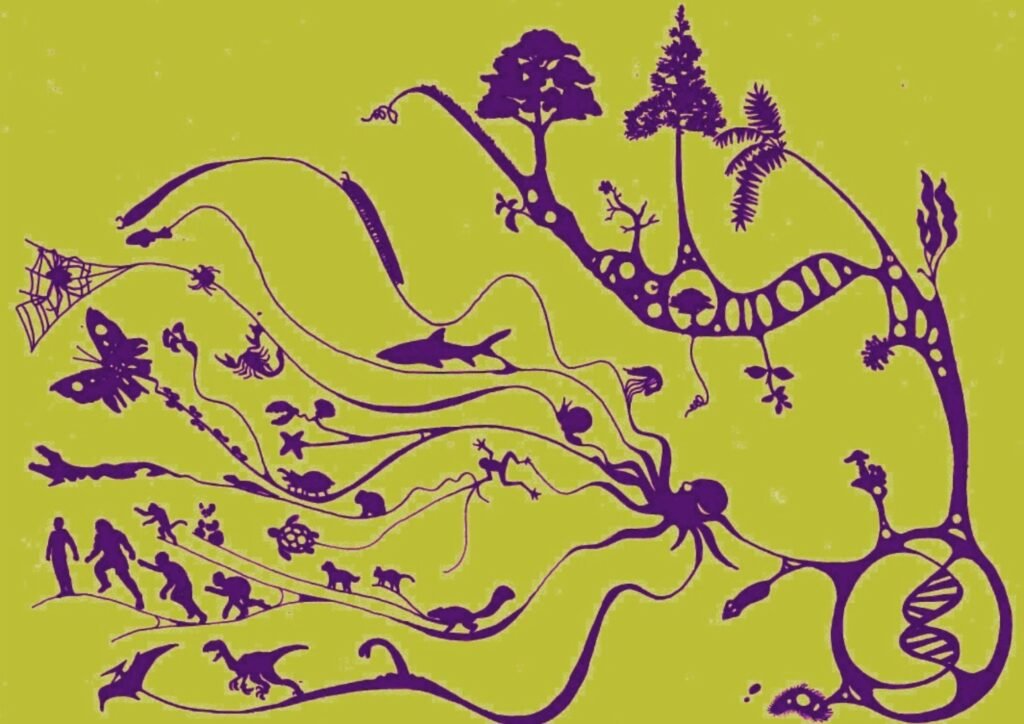
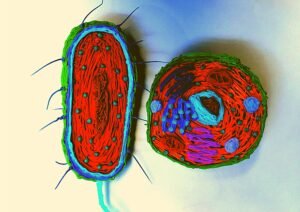
The process of life which started out as RNA and DNA had branched out in the earlier periods of Earth’s history with the evolution of eukaryotic cells. Eukaryotes then evolved further into multicellular organisms of various shapes and sizes.
The evolution of multicellular life forms first began around 500 million years ago, a relatively short period considering the history and age of Earth, which is 4.6 billion years. Which means, for about 4 billion years, Earth was home to just the single-cellular prokaryotes and eukaryotes!

Different periods in history saw the evolution and growth of several organisms with varying traits, enabling them to survive in their harsh surrounding environment. By environment, we don’t just mean the places where the life forms survived, but the other organisms that evolved alongside them too.
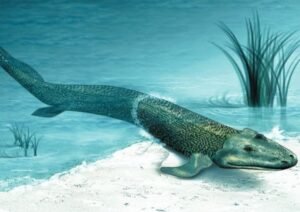
The distinction between the preys and predators started early when the organisms were still living in the oceans! Then came a point in time when a few organisms decided to move out of the oceans, probably to escape predation, and into the land. When life finally set foot (fin) on land, the changes it underwent were complex. The process of adaptation of life to land and air began, and it enabled the growth of plants and animals in different shapes and sizes.
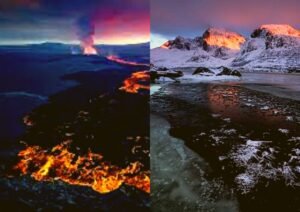
The land forms we see today don’t remain the same forever and nor have they remained so in the past. There are several changes taking place even right now from a few feet under our feet and extending up to the very core of Earth! And it is a pity that the fact that we are living in a precarious balance of rocks seldom crosses our minds.
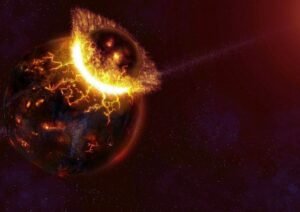
By now, the question ‘Where did the planet which houses all the different life forms come from?’ might have crossed our minds. Also lingering on is the question ‘Where and how did the different types of elements and their atoms get formed in the universe?.’ Fortunately, both these questions have a unified story as the answer.
Gravity and the Fusion
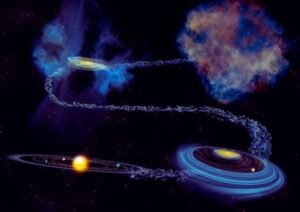
Our planet and the star system housing it are the results of a sequence of events that started around 13 billion years ago. We had earlier seen the formation of hydrogen and helium gases from the subatomic particles that escaped the baryogenesis process. These atoms were floating in the newly formed universe (380,000 years after the Big Bang!) when there occurred fluctuations in the density of the universe.
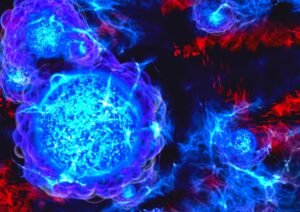
Regions in space where the concentration of hydrogen and helium atoms were abundant in number grew denser than those where the gases were scarce. In time, the hydrogen and helium gases in the denser regions started attracting each other using the newly formed force of gravity. The gravitational force, as we know, is the general force of attraction between any set of bodies having mass.
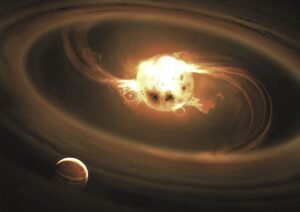
The increasing gravity between the hydrogen and helium atoms resulted in the formation of large balls of gases, whose volume decreased with time. These balls of gases kept shrinking, with more and more atoms starting to collide with each other inside them. The result was that the temperature and pressure inside the balls (the gas balls and not anything else!) started growing, and these balls came to be known as the stars.
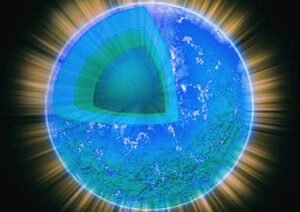
The process went on, and the increased heat and pressure conditions started fusing the hydrogen and helium nuclei to form a new nucleus and a new atom, namely lithium. The nuclear fusion processes had started inside the stars, with more and more hydrogen and helium atoms fusing to form newer and newer atoms. Elements like carbon, nitrogen, oxygen, chromium, calcium, etc., were formed then. The new atoms were stacking up inside the stars in layers with the densest atoms concentrated in the stars’ core. The element production process had started, and it went on in full swing until the iron atoms were formed.
The essential elements required for the formation of the amino acids had evolved inside the stars by then. But Earth we live in and the space it floats in it consist of a lot more number of elements and their respective atoms. Such elements that were heavier than iron were formed later, but sadly for them, under much heavier circumstances.