Iron, being a dense nucleus, will not allow any addition of new neutrons or protons inside it. So the element production process came to a pause.
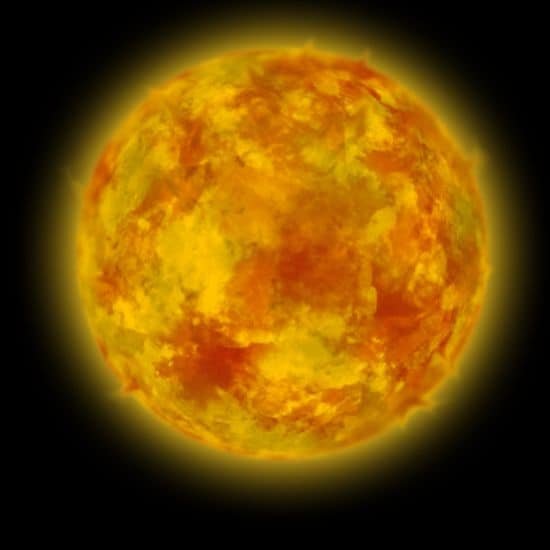
With the stars’ mass increasing every minute by the formation of newer, heavier elements, after a critical point, the stars started to collapse in on themselves. The density of the stars further increased then. The result was that the stars’ temperature and pressure grew higher than their original levels. This increase in temperature and pressure started the element production process once again, this time, fusing the iron nuclei too and forming heavy elements like gold, copper, uranium, platinum, etc.

The stars carrying almost all the elements we know of and even more (!), gradually ran out of fuel, (hydrogen and helium) and the structural integrity of the stars became compromised. Then occurred the supernova explosions, some of the most violent explosive events in space. They are called so due to the amount of matter that was expelled out of the stars during the explosions (damn too high!).
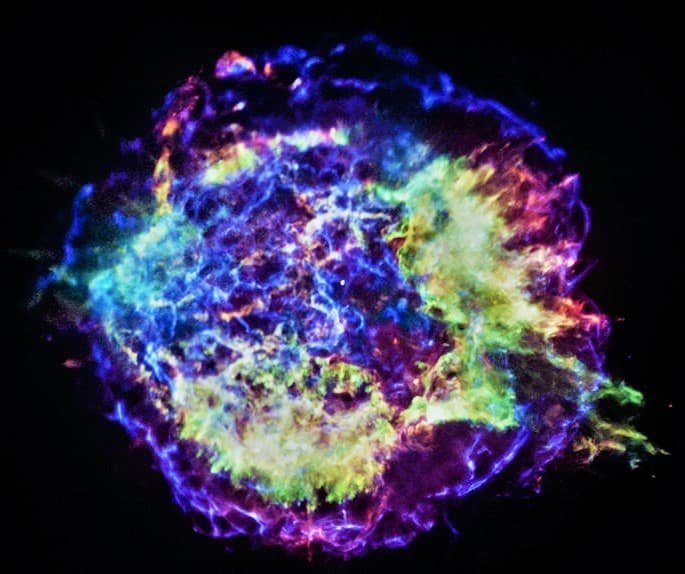
The universe which was so far colourless (hydrogen and helium, being colourless gases), was turning colourful with the new elements sprayed out into space. Elements like lithium and strontium gave the colour red, while potassium gave violet and copper, blue-green and so on. These elements started mixing with the residual hydrogen and helium atoms floating about in space and formed clouds of gases that came to be called nebulae.
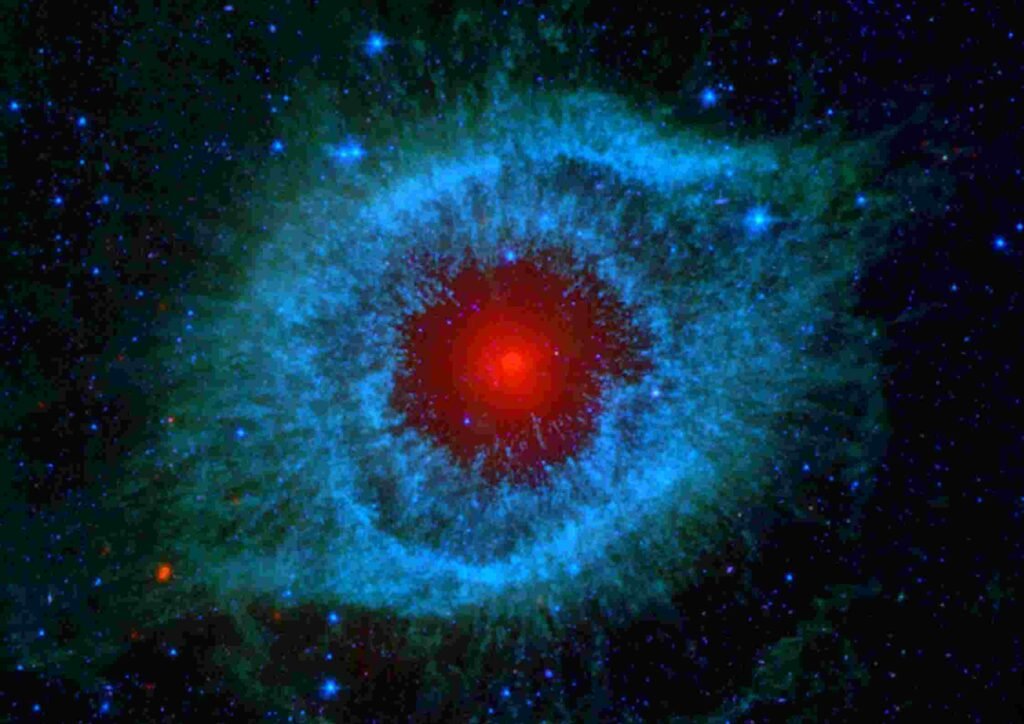
Our observation of space using satellites and telescopes has yielded beautiful results with numerous pictures of colourful gas clouds floating about in space, far and near from Earth. Not only these, but we also see pictures of a few other astronomical bodies too.
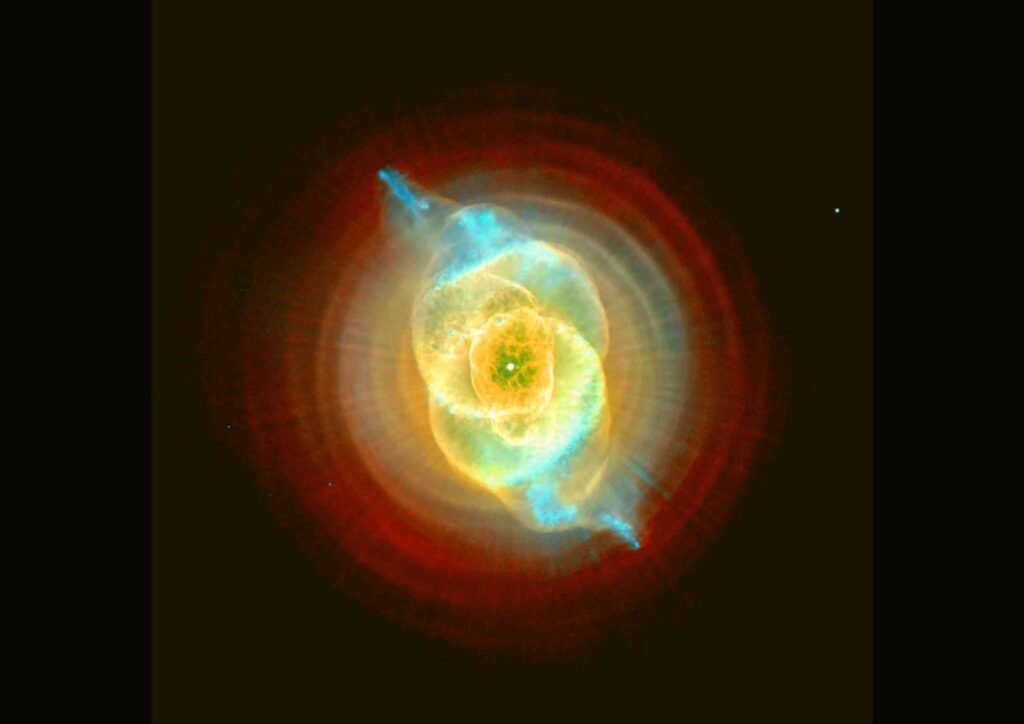
Structures like galaxies, which are made up of millions and millions of stars and in various shapes and sizes also catch our eyes. These structures were formed out of the gas clouds we saw above as nebulae.
The Earth
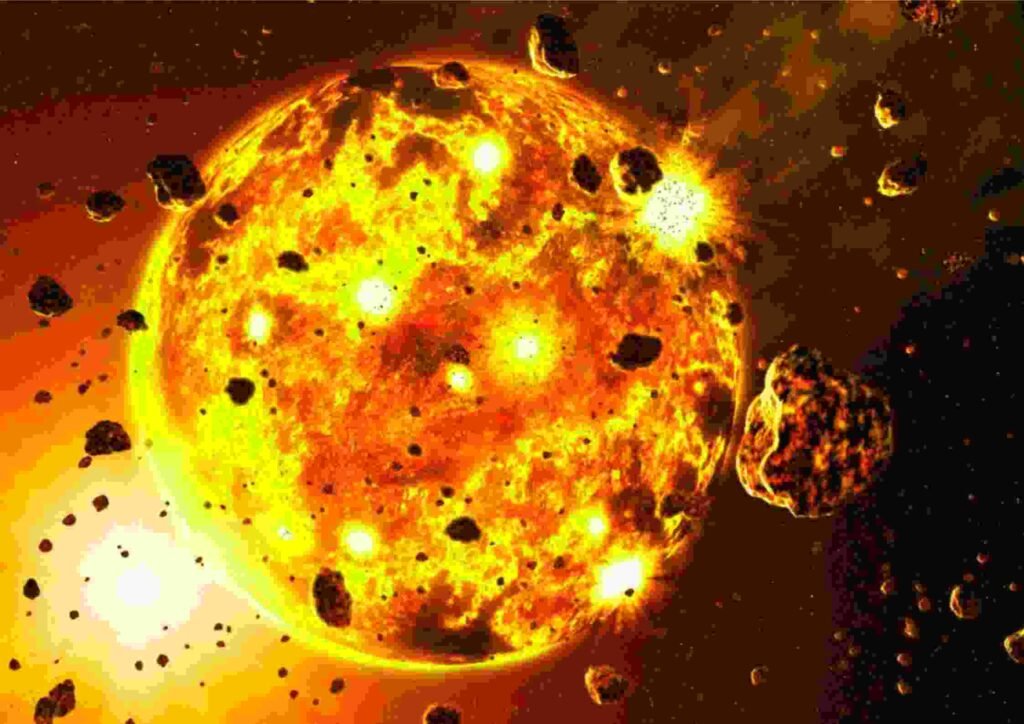
Sometime after the supernova explosions, the gases inside the nebulae started to clump together again, but this time it was not just for the formation of stars, but planets too. Our solar system is said to have been formed in one such region where a previous supernova explosion had taken place. This provided for the elements that make up the planets right now. Our star, the Sun had taken shape in the way similar to that of the stars we had seen earlier, the only difference is that it is still glowing. The formation of our planet is, however, a whole different story.
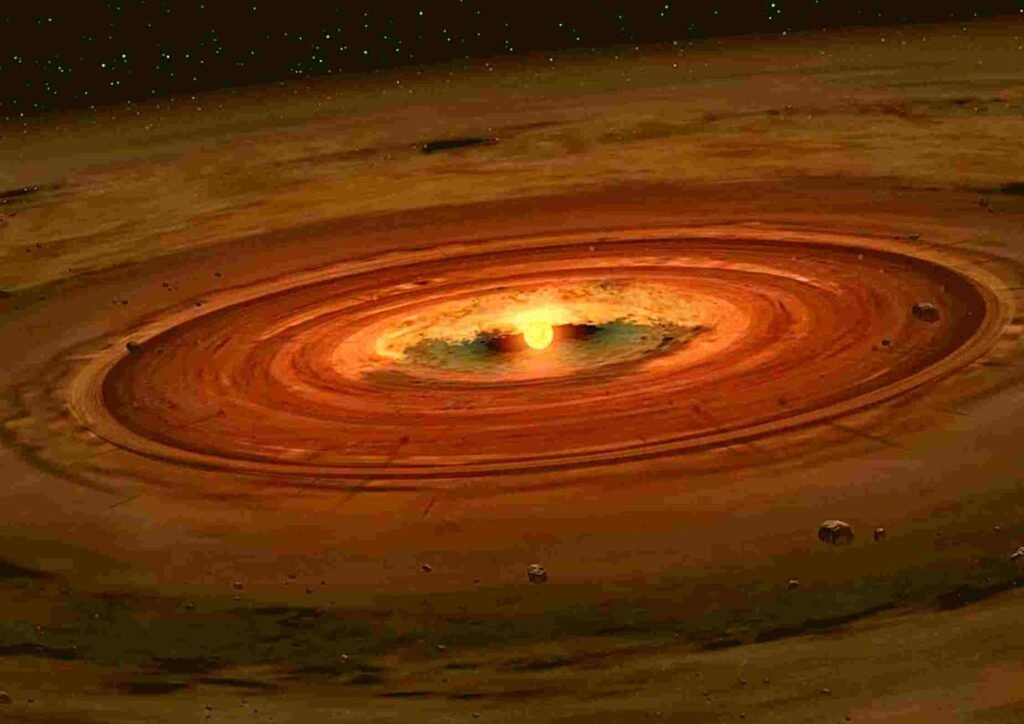
Earth didn’t take shape in a single day by a wave of the hand from God. It was but an arduous process, for the planet, which took millions of years! By formation, we mean the planet taking its current shape. And it took a long time because of the various stages it went through from a planetesimal to a planet, the tilting of its axis, the formation of its moon, the arrangement of elements in layers of concentric circles forming the core, the mantle and the crust, the cooling down of the lava that was running all across the planet’s surface, etc.
The gravitational force, which very much aided in the star-formation processes is, of course, the major factor which influenced the planet in taking its present shape. The elements making up Earth varied in their density and mass. This prompted gravity to sink down denser elements like iron and nickel into the core, while lighter elements like silica, aluminium, carbon, nitrogen, phosphorous, etc., floated up towards the surface.
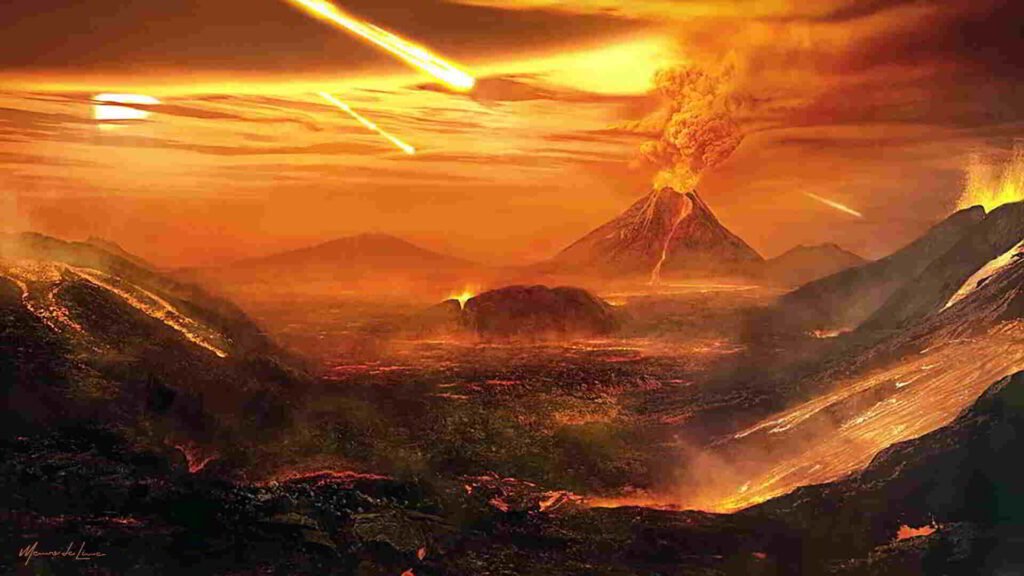
We must mind that Earth, in its initial stages, was a fiery ball of lava with molten elements and rocks flowing over its surface ceaselessly. It took some time (around 50 million years) for the planet to cool down on the surface. The inner part of the planet is, however, under constant heat and pressure. Once the surface cooled down and large sheets of rocks got placed, the molten rocks inside the planet were beginning to be pushed out as lava through the volcanoes.
Along with lava, came out gases like carbon dioxide, nitrogen and steam. These gases, however, were not sufficient enough to form a stable atmosphere, both in quantity and quality. Gases like oxygen and ozone were emerging too, but not in large quantities.