By karma, if what is done in the present can affect the future of a living being, then there must be a definite chain of events leading to that point in the future.
We have heard about this chain of events as the fate. Some believe in it while others say ‘fate is what we make it’ (depends on perspectives, right?). What if there exists a definite fate or, in other words, a definite future and everything in the universe is just coursing through an experience? What if we use science to understand fate?

The Theory of Relativity explained by Albert Einstein explains how space and time depend upon the observer’s (perspective) and how time works as a fabric in reality, stretching from the past to the future, through the present. Like karma, this comparison of fate and Relativity Theory has been done before, but for our discussion, we’ll get through the concepts again in a new light.
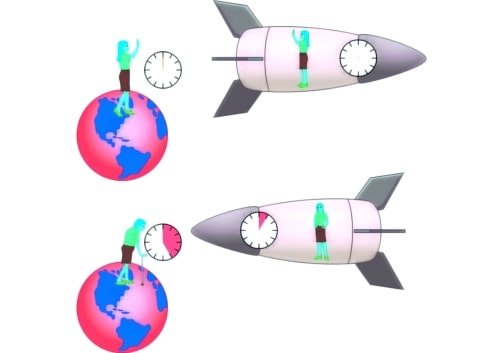
The Relativity Theory, as we know, explains how time elapses on a (relatively) stationary object and for an object in motion. The stationary object works through time in a constant rate whereas, for the object in motion, the lapse rate of time is slower in comparison to the stationary object, i.e., the greater the speed, the slower is the lapse rate of time. Most science fictions are based on this concept where an astronaut leaves Earth and travels at the speed of light, completes his mission and returns to Earth only to find that Earth had moved on into the future, while he had aged only a few years, the least! (Interstellar, of course!)
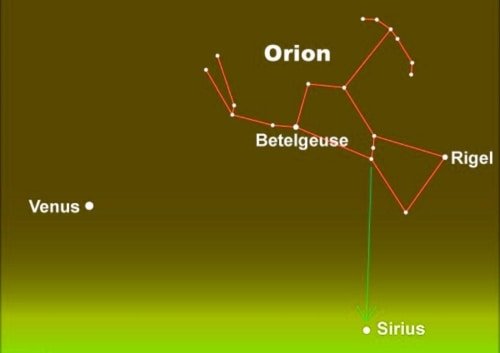
We’ll get an example of how time works (according to Relativity Theory) from our observation of stars in space. One of the most prominent stars visible in the night sky is Sirius also known as ‘the Dog Star’, located at about 8.3 light years from Earth. As we know, a light year is the distance covered by light in a year when travelling at its usual speed, 300000 km/s. So, light from Sirius takes about 8.3 years to reach Earth with the distance between the 2 bodies remaining fairly constant across any observational period.
Let’s consider the present time of Earth and Sirius. By present, we mean today and the time we pass through is the present second. The present time on Sirius and the present time on Earth, when compared (by our understanding of time), must have a constant lapse rate. If an astronaut were to observe Earth from the surface of the star, he would observe the present day, when the distance between the 2 bodies (8.3 light years) and the time taken by the light to reach him are ignored. Assuming the present time on Earth to be 1st January 2020, the astronaut’s present time will coincide with Earth’s present, that is, 1st of January 2020. If the astronaut views Earth, he would see the events happening on the same day (ignoring the distance between the bodies)
Now, if our solar system suddenly gets off course from its usual path around the galactic centre, and starts moving away and the distance between Sirius and Earth increases, the present time on both the bodies starts to differ. The present time on Earth being 1st January 2020, the astronaut, in this case, wouldn’t observe the above date, but he would be looking into Earth’s past, say 1st January 1950 or 30th June 1900, His present time, will coincide with the past time of Earth.
The extent up to which the astronaut sees into Earth’s past depends on the speed at which Earth moves away from Sirius and the distance it has moved to from its original position. The farther it moves away from Sirius, the astronaut will be able to see farther into the past.
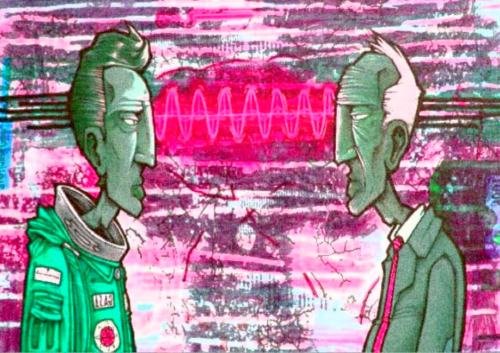
Now, if Earth were to move towards Sirius, for the astronaut observing Earth, his present time should coincide with a future time of the planet, and he would observe the events taking place on, say 1st January 2050 or 2nd June 2100. In other words, the present time on Earth and the present time on Sirius would vary! Practically it is impossible for an astronaut or anyone to make these observations, but what is important is that the concept of time is relative and the flow of time is dependent on factors like gravity, the observers, etc.
In the general sense, every event, chance, action and consequence are relative. All it takes is the right technique of observation.