When speaking about souls, the most common questions coming to our minds are about the previous and afterlives and life after death.

This discussion could be meaningful only after our understanding of the consciousness and karma. Across different cultures, it is generally believed that upon death, a soul can be born again as a different life form, as a five-sensed being or a six-sensed human or even a single-sensed organism.

The concepts of heaven and hell have haunted the lives of many souls throughout humankind’s history. Although science, with the growth of technology and understanding of living organisms (biologically), discredits these notions as results of the human imagination, we must give them a serious thought from spirituality’s side.
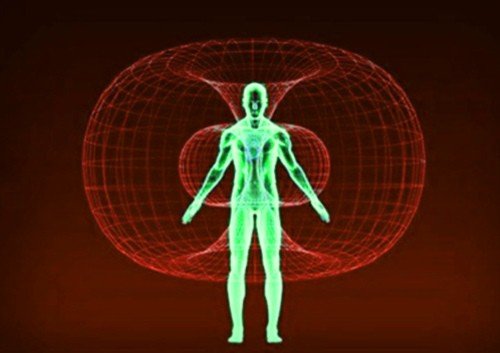
We have understood the soul to be a field of energy, whose intensity’s under constant fluctuation (the senses expressing themselves as instincts, thoughts and emotions), inside the physical body. A soul is born when a group of bio-molecules start performing functions with coherence to their environment. The molecules absorb and expend energy simultaneously to form a stable energy field. The field goes through a lot of changes throughout its life. We humans experience this change through thoughts, emotions and actions. Finally, the soul dissipates back as pure energy in the event we call death.
The process ‘death’ is quite a contentious issue since; there’re different possibilities and probabilities for its occurrence in different living organisms. In single-cellular organisms, we saw how death occurs when cells divide and produce new sets of cells. Here, the metabolic functions of the parents stop and they are started again in the new generation. In multicellular organisms like us, death occurs when all our metabolic functions come to a halt. In multicellular organisms, having a different set of physical organs to function independently, the death of the parent organism is not linked with the offsprings (except emotional attachments, of course).
In either case, the energy field (soul) of the parent organism gets dispersed, or in other words, dies.
Death
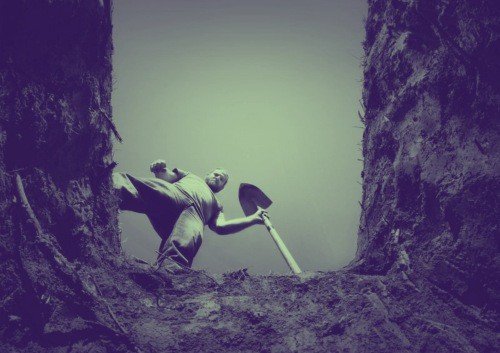
In our daily lives, we see people meeting death in various situations: by accident, during sleep, by poisoning, gunshots, suicide by hanging, pills, slitting the veins, and so on. In all these types, our physical body is disturbed in one way or the other. Like, when a man commits suicide by hanging himself on a rope, he restricts the air passage to his lungs. The consequent metabolic processes that depend on breathing are disturbed, and a chain of reactions started.
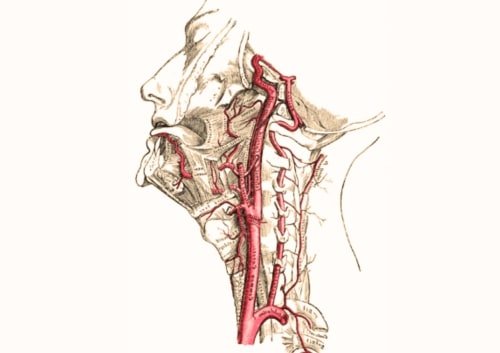
Without air and the oxygen in it, the CO2 in his blood increases and haemoglobin get saturated with CO2. The CO2-rich blood gets circulated throughout the body and the cells which usually derive oxygen get back CO2 instead. The energy balance (from the food) inside the cell using oxygen as a catalyst, is disturbed by both the absence of new oxygen and the CO2 being deposited by haemoglobin.
Energy production, being a continuous, sustained process, meets a shock and the cells stop functioning one by one within a short time. This stops the energy field from sustaining, resulting in death! Another example is an accident. When a person meets with an accident and has a blood wound in some part of his body, the loss of blood results in the shortage of haemoglobin carrying oxygen to the cells (to produce energy).
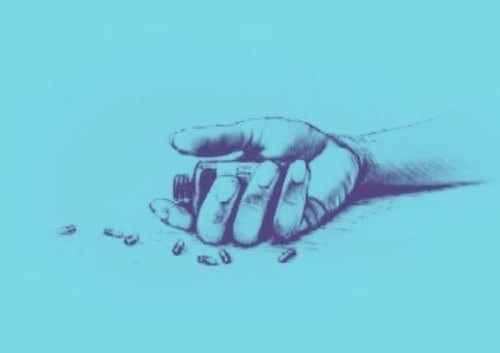
In poisoning, molecules in the poison which are not accepted by our bodies in any condition are loaded forcefully. The cells have no choice but to get saturated by these molecules. This saturation impedes the normal functioning of the cell, disrupting the production of energy, resulting in death. The intermediate stage between our bodies (physical) functioning normally and death is the occurrence of diseases and wounds.
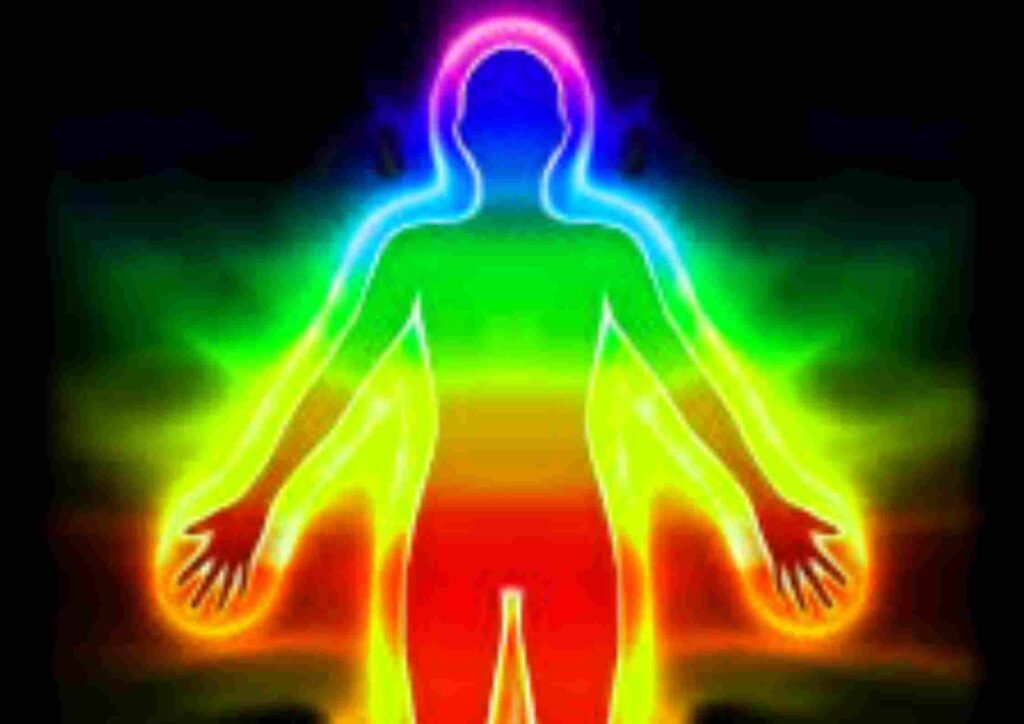
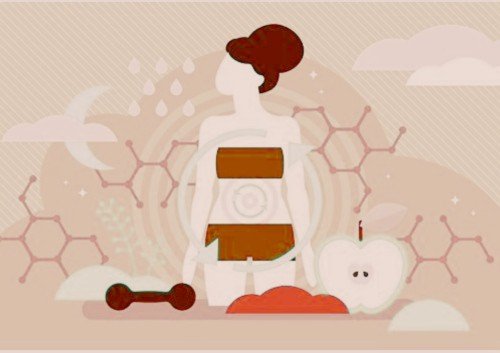
When our body gets afflicted by a wound, it first clots the wound by sending in some platelets. Then, the wound is healed by producing new cells at the site of the wound. The total energy of the body, usually balanced for performing all metabolic functions simultaneously, is now disturbed. More energy is spent on healing the wound, and relatively lesser amounts for other functions.
This explains why we feel weak when we get a heavy wound. On the whole, the body – both the physical body and the soul together – maintains a balance or equilibrium in its functioning, with energy as its base. Now, death is an exhaustion of energy (soul), and consciousness is a product of the soul.
So, the probability that consciousness persists after the soul leaves the physical body is zero. This means life after death is improbable and impossible.