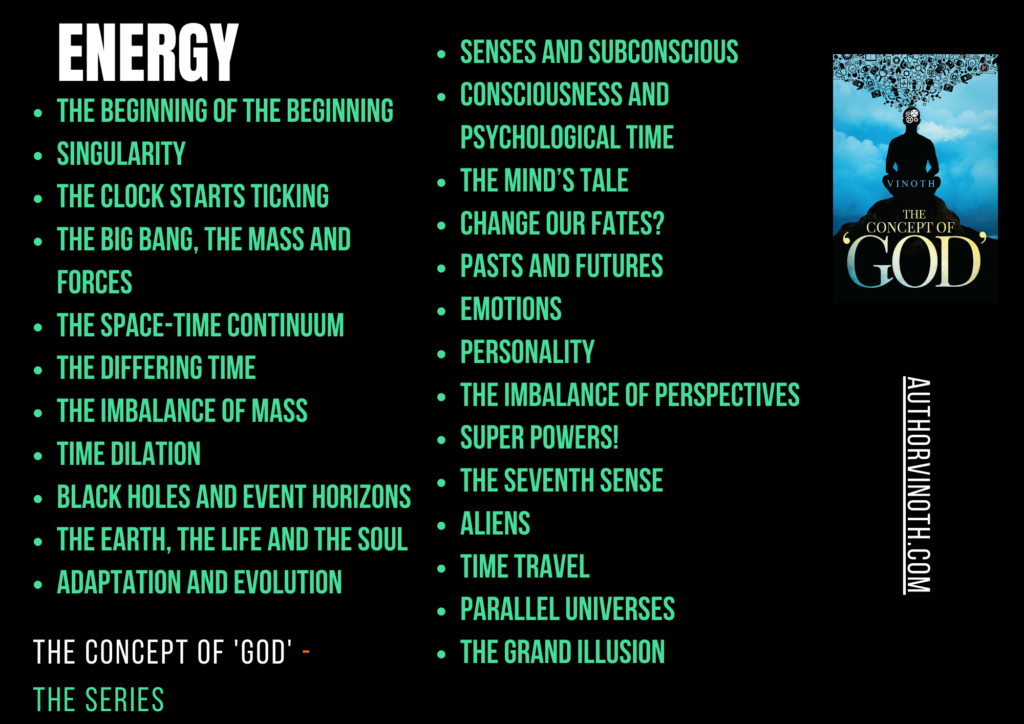
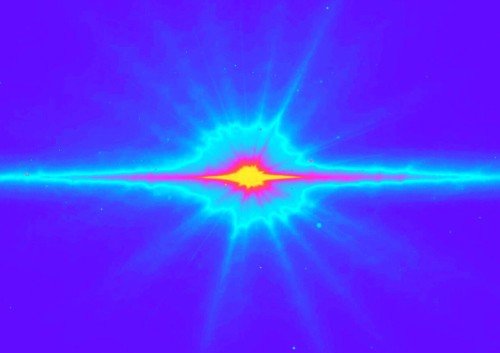
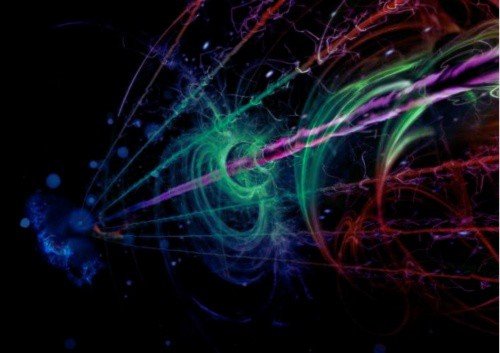
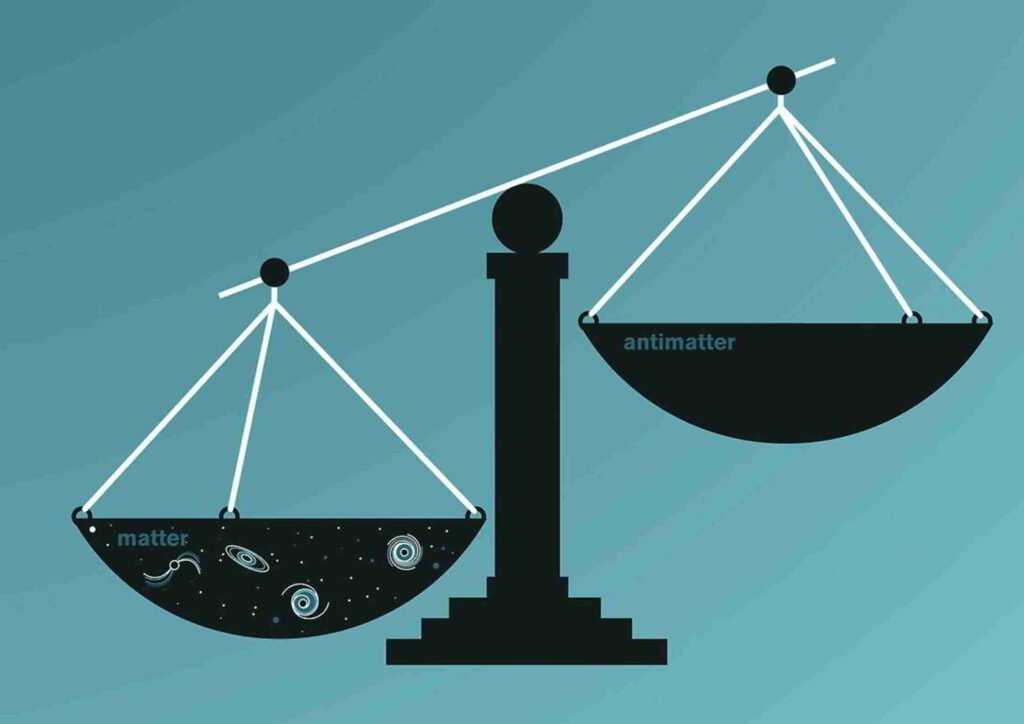
In the mass formation process, a random imbalance led to the prevalence of matter over antimatter (baryogenesis). The escape of more matter in the long run led to hydrogen and helium nuclei shaping up in space.
The formation of atomic nuclei didn’t affect the time of particles which made up the protons and neutrons. But the time exhibited by the nuclei as a whole varied from the particles making them up. The electrons formed alongside couldn’t slow down due to the surrounding heat which was toning down, and as such, the nuclei and electrons roamed about the expanding universe for the next 380,000 years. Then, the hydrogen and helium atoms took shape (electromagnetic force bonded the electrons and the nuclei together) and started occupying space in the gradually cooling universe. When the density of the universe got mismatched, and some regions got more matter in them than the others, there came the stars.
Time Dilation
The gravitational force took control of hydrogen and helium atoms and produced stars, which then produced light and heat through nuclear fusion. After gravity interacted with mass and formed giant structures like stars, the time (for mass) becomes a little bizarre!
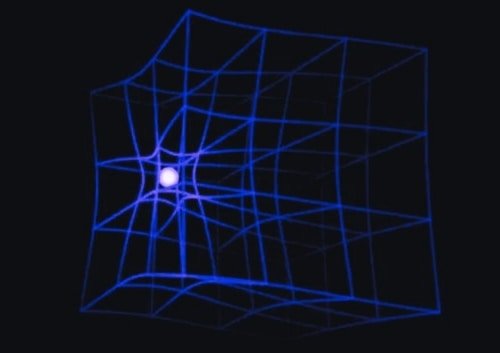
All the particles (mass) go through time at the same steady rate, the rate at which we experience one second each. This notion depends on the momentum gained by energy for transforming into matter. When matter gets attracted by gravity, the pace of energy’s momentum (time) tends to slow down due to the attractive force exerted upon it by any gravitational body. Any kind of motion (momentum) shown by the particle is slowed down, be it its vibration, spin, displacement or anything. This apparent slowdown in the pace of energy’s momentum (as matter) appears as the slowdown of time of the particle. It is better known as the relativistic concept of time dilation!
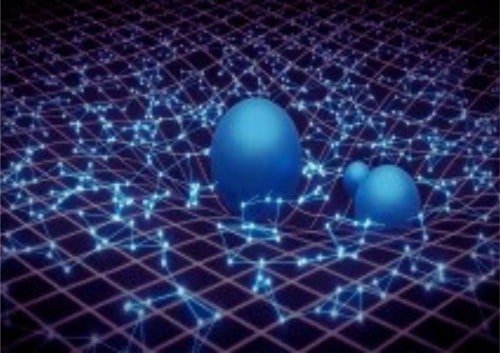
The particle in which gravity acts on doesn’t feel the slowdown of its time (the pace of energy’s momentum), since the length of a second of its own time is elongated or dilated, and it experiences time at the same rate. In other words, the interval between 2 consecutive seconds for a particle increases and the total time it experiences in the gravity field decreases. Any person, with his own arrow of time, viewing the particle observes the slowdown (elongation) of the particle’s time. And for the particle, whose momentum is slowed down, the time of the person would seem to go faster than its own!
Black Holes and Event Horizons
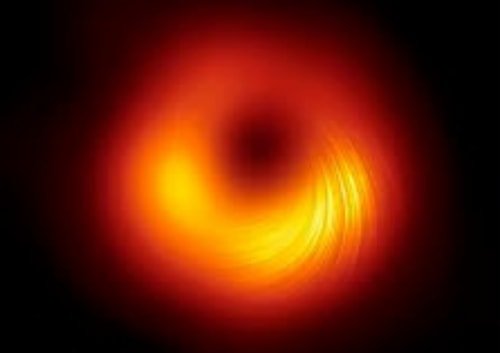
If the gravitational force ever gets strong enough to stop the flow of energy (mass) and ends its pace of momentum, the particle is disintegrated back into energy and this forms a void in space around the source of gravity. This void is known to be a black hole. But the force carriers don’t get affected by such structures the same way as the mass. The photons which are massless energy streaming through space are out of reach for disintegration, since they only exhibit a flow of energy and not a static mass.
This stream of massless particles when reaching a black hole, start circulating or move outside the gravitational region, and form the event horizon.