We take inputs from our surrounding reality through a filter in our thought process. The filter limits our view of reality to a single line of sight (and even time)! This filter of vision is known as our perspective.

We rely heavily on our perspective or point-of-view of events to understand the reality around us. Our perspectives, in turn, depend on our past experiences, the knowledge we have gained in our lives and our emotional balance in any particular situation. This is evident from our minds that have been conditioned by our cultures and educational systems. Every perspective is the result of the combination of these factors in different proportions!

Usually, our minds perceive the events happening around us with just one particular perspective at a time, the one our emotional status allows our mind to observe the events. Given time, when we rethink the situation and gain different perspectives about the same situation. When our emotional status is altered, the perspectives we gain are numerous with the only limitation being time. Now, let’s imagine a situation to gain a perspective about perspectives.
A man and a woman take a picture, kissing each other, standing under the Eiffel tower. As romantic as the scene might seem, the perspectives we gain from the picture are different as each of the sand grains on a beach. I, for example, am just explaining the event to give a better understanding of perspectives, while you could’ve had a personal experience of the same event, which makes you re-live your past moment (the emotional perspective).
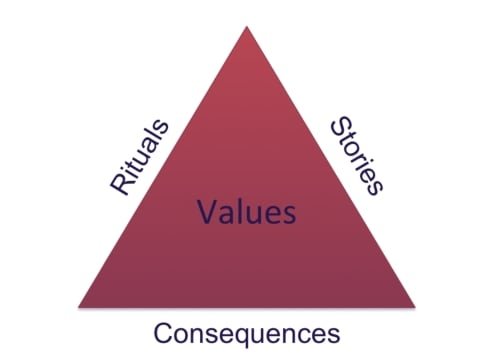
Someone could be wondering when he or she might experience the event, while someone else can completely ignore the presence of the couple and think about how they built the Eiffel tower in the first place (The mind’s curiosity to know and learn (or) the knowledge perspective). This scenario can be taken easily by people from the western part of the world, who largely consider this romantic, but many in the Eastern world think that a man and a woman kissing each other in public is gross and that love should be maintained as a private affair (here acts the cultural conditioning of the mind).

Such varied perspectives arise from the same situation, and many of these perspectives can be gained by a single person, given time and experience. And again, only many of these perspectives can be gained and not all of them! The same event appears differently to an astronaut floating in space, and it is entirely irrelevant to an alien viewing the event from his planet. Each of these perspectives has a unique impact on the observer’s futures, but what’s important is that any event that happens in reality has a large, uncountable number of perspectives. If we consider an event to be the centre of a large sphere, the number of dots that can be placed anywhere around the centre (which is infinity) represent the number of perspectives.
The reality around us keeps generating billions of events every second and each of these events has an infinite set of perspectives around them and all the events happen in an impeccable order, and it is here we can understand the meaning of the term, omniscience.
Not just knowing the order behind the chaotic reality, but understanding all the perspectives surrounding the order, is true omniscience.
Now the question, is it even possible for us humans to gain omniscience? Obviously, not. However brilliant we think we are, our brains’ efficiency has been understood to be just between 5 to 10 percent (our brains use all the neurons at any time, but not to their full potential). True, given time we can understand a lot of perspectives around any event, one by one. But, it is normally impossible for our brains to think the thoughts about the different perspectives and combine them to form a single mind! Forming multiple minds with thoughts about the varying perspectives is possible, but putting them all together is out of reach of human potential.

Our chain of thoughts will literally collapse if such volume of information is crammed together to form a single mind. This is similar to our experiences with emotional behaviours. When we experience severe emotions such as rage or ecstasy, a large number of thoughts join to form the mind and usually, in that state, we experience a confused mind. The perspective situation is similar, with a maximum of 10 to 15 perspectives that can be gained (at a time) based on our experiences and knowledge, and putting all of them together (as a mind) would leave us confused and inconclusive!

When we gain 3 perspectives (about an event) at the same time, our sense of judgement breaks down, and with more than 5 perspectives, we start questioning our morality, and we’ll be jumbled in the end. With more than 10 perspectives, our chain of thoughts gets crashed, and there won’t be a mind left after that!

What’s the chance that a living being (in our case, the God) can possess omniscience? First, for anyone to gain and analyse the information about all the events and their perspectives, we would need a brain with infinite potential, since the entropy of information about all the events (and their perspectives) is too high! Second, even if we somehow manage to gain omniscience, we would be left with no choice but to passively observe the order of events around (or before) us.
Interfering in the flow of events would make us take a stand, and it will need a definite perspective from our minds (a biased stance). For a God, interference in events will create a paradoxical situation for his/her omniscient capabilities. In other words, an omniscient God can’t interfere in the order of events, but can just observe them from a distance. If God interferes, he/she would lose their neutral stand in the order, which makes them lose the ‘God’ status itself!
Tough job being a God, isn’t it?